The steepest ski runs in the world
When it comes to steepness, there are thousands of ultra-steep chutes, cliffs, and pillow lines. But among the named runs, where do the steepest of the steep reside? We rounded up the steepest ski runs in the world right here. So check them out.
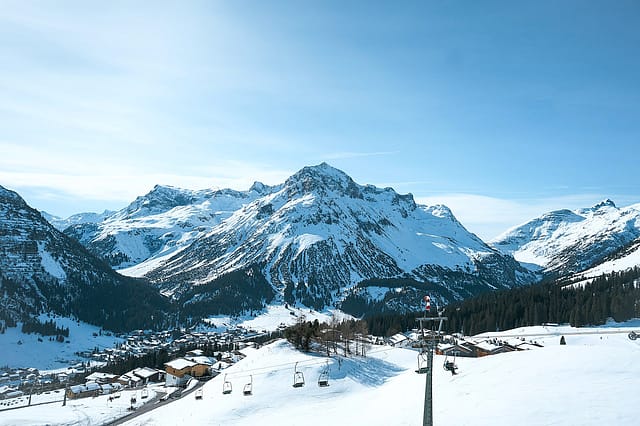
When testing your mettle (and the strength of your ACLs), you might wonder where the steepest spots are to ride. Dropping cliffs in Alaska, surfing pow fields in Utah, or digging your edges into some World Cup courses in Austria…they’re all on this list and begging to be ridden.
So if your DIN settings are dialed, your edges are sharp, and your stomach is feeling strong, get ready for some serious pitch!

The steepest descents ranked
Rambo – Crested Butte Mountain Resort, USA (~143%)
Black Hole – Smugglers’ Notch Resort, USA (~133%)
Christmas Chute – Alyeska Resort, USA (~119%)
Kandahar “Free Fall” – Garmisch-Partenkirchen, Germany (92%)
Direttissima – Mürren-Schilthorn, Switzerland (88%)
Streif – Kitzbühel, Austria (85%)
Lauberhorn – Grindelwald-Wengen, Switzerland (85%)
Great Scott – Snowbird Ski Resort, USA (84%)
Langer Zug – Lech Zürs, Austria (80%)
Harakiri – Mayrhofen, Austria (78%)
Mont Fort – Verbier, Switzerland (77%)
“The Swiss Wall”/Chavanette – Portes du Soleil, France/Switzerland (76%)
1. Rambo – Crested Butte Mountain Resort, USA (~143%)
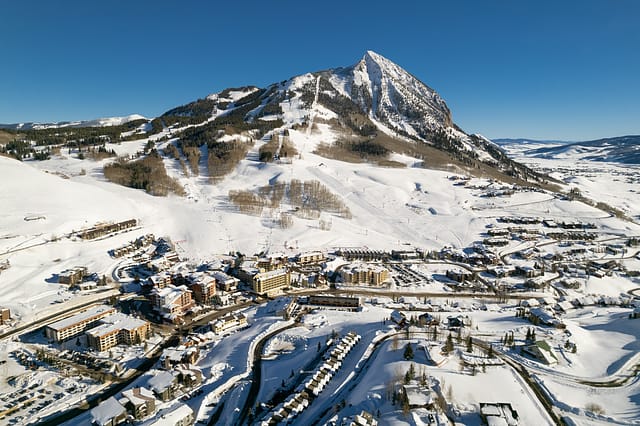
Rambo at Crested Butte is often cited as one of the steepest lift-served runs in North America, and once you stand at the top, you’ll understand why. It drops straight off the North Face lift and wastes no time getting stupidly steep. Ungroomed, narrow, and lined with trees, Rambo is a sustained fall-line pitch that demands perfect edge control from the first turn.
2. Black Hole – Smugglers’ Notch Resort, USA (~133%)
Black Hole sits under the Madonna lift at Smugglers’ Notch in Vermont and delivers that classic East Coast intensity. Often covered in tight moguls and framed by trees, Black Hole has that old-school New England vibe (aka insane and on the verge of perilous). There’s no grooming, no softening the blow. It’s raw, direct, and the kind of run that locals fear, and visitors have nightmares about long after they’ve gone home.
3. Christmas Chute – Alyeska Resort, USA (~119%)
High above Turnagain Arm, Christmas Chute is steep in the way only Alaska can do steep, and is often reported to have a max gradient of around 119%. Accessed via the Headwall, it drops into a narrow, dramatic chute with serious pitch and exposure. Snow conditions can range from champagne pow to windblown and bulletproof, and you’ll need strong legs and sharper edges to manage it. The views over the water are incredible, but don’t get distracted… this one demands full attention.
4. Kandahar “Free Fall” – Garmisch-Partenkirchen, Germany (92%)
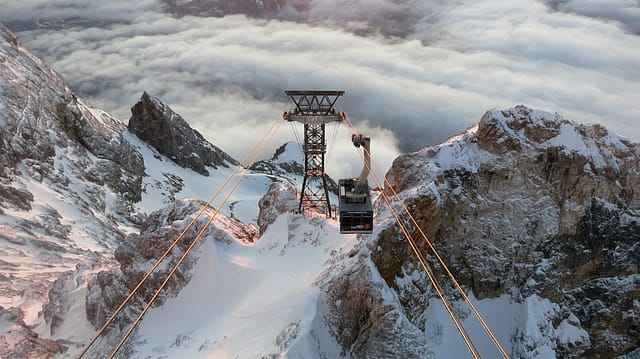
The Kandahar World Cup course in Garmisch-Partenkirchen is legendary, but it’s the “Free Fall” section that gives it a place on this list. With a maximum gradient of 92%, it’s one of the steepest groomed race pitches in the world, and is met with caution by even the best riders on the planet (though you wouldn’t know it watching them hurl themselves down there at full speed). Wide, fast, and exposed, Kandahar feels more like a launch ramp than a ski run.
5. Direttissima – Mürren-Schilthorn, Switzerland (88%)
Direttissima at Mürren-Schilthorn is widely regarded as one of the steepest groomed runs in the Alps. Dropping straight down the mountain with almost no fall-line variation, it’s a relentless pitch that tests your mettle from the first turn. When freshly groomed, it’s eye-wateringly fast. When scraped off, it’s utterly unforgiving. Either way, Direttissima is pure commitment, with jaw-dropping views of the Eiger, Mönch, and Jungfrau.
6. Streif – Kitzbühel, Austria (85%)
The Streif is arguably the most famous downhill course in the world. Home to the Hahnenkamm race, it features terrifying sections like the “Mausefalle” (mousetrap), where racers literally launch themselves into the air through sheer speed. The gradient hits 85%, but it’s the combination of ice and off-camber chicanes that makes it legendary.
7. Lauberhorn – Grindelwald-Wengen, Switzerland (85%)
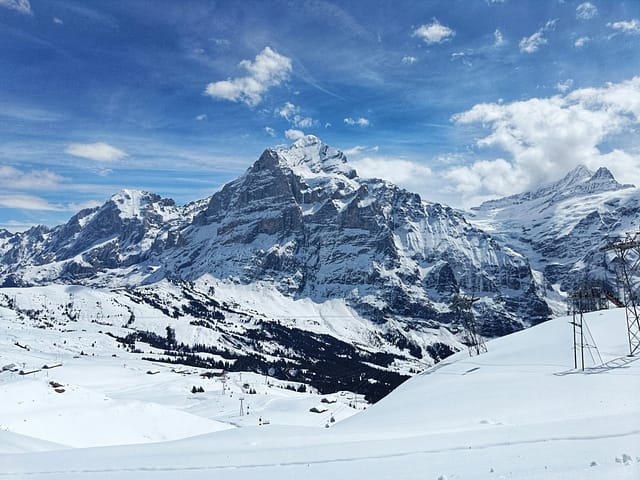
The Lauberhorn is best known for hosting the longest downhill race on the World Cup circuit, but it also packs serious steep sections. The gradient reaches around 85% in places, particularly through its more technical upper pitches. The Lauberhorn is wide and fast, designed for racing, and framed by classic Swiss alpine scenery. Skiing it recreationally feels like stepping onto hallowed ground, especially if you’ve watched the race broadcasts.
8. Great Scott – Snowbird Ski Resort, USA (84%)
Great Scott sits right under the tram at Snowbird, meaning you have an audience whether you want one or not. It’s steep, sustained, and often filled with moguls. With an approximate 84% gradient in sections, Great Scott is one of Utah’s most well-known expert runs. Conditions vary from chalky powder to firm and technical, depending on the weather. Either way, it’s a rite of passage for Snowbird’s strong riders, and one that demands respect.
9. Langer Zug – Lech Zürs, Austria (80%)
Langer Zug in Lech Zürs is short, sharp, and unapologetically steep. With a maximum gradient of around 80%, it drops quickly from the Rüfikopf area and keeps things tough the whole way down. Often groomed but still intimidating, Langer Zug feels like a vertical wall when viewed from below. And it’s pretty common to watch people descend the bottom half on their backs (or faces – yikes!).
10. Harakiri – Mayrhofen, Austria (78%)
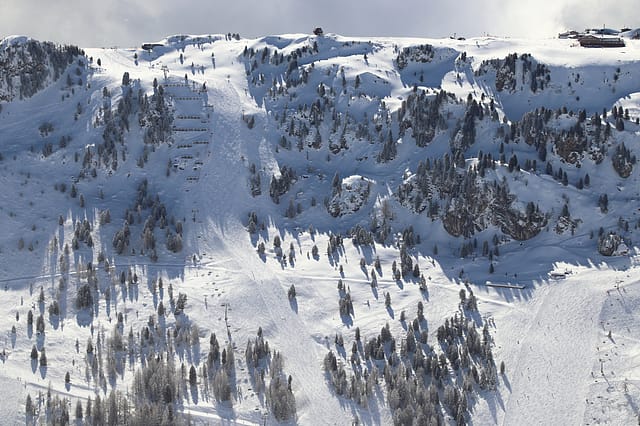
Harakiri in Mayrhofen is Austria’s steepest marked slope, with a maximum gradient of 78%. It’s fully groomed, which somehow makes it even more intimidating because you can see exactly how steep it is. When icy, Harakiri is absolutely relentless and catches many riders out. Even when it’s soft and slushy, it’s still no joke. Harakiri isn’t a World Cup course, but it has become a bucket-list run in its own right.
11. Mont Fort – Verbier, Switzerland (77%)
From the top of Verbier’s Mont Fort, you’re standing at over 3,300 meters (10,827 feet), with panoramic views across the Alps. The run down is steep, often ungroomed, and frequently bumped out. At 77% gradient in places, it’s a serious descent that can feel exposed and technical, especially in firm conditions. Mont Fort is classic Verbier terrain: big, bold, and dramatic. Don’t say we didn’t warn you.
12. “The Swiss Wall”/Chavanette – Portes du Soleil, France/Switzerland (76%)
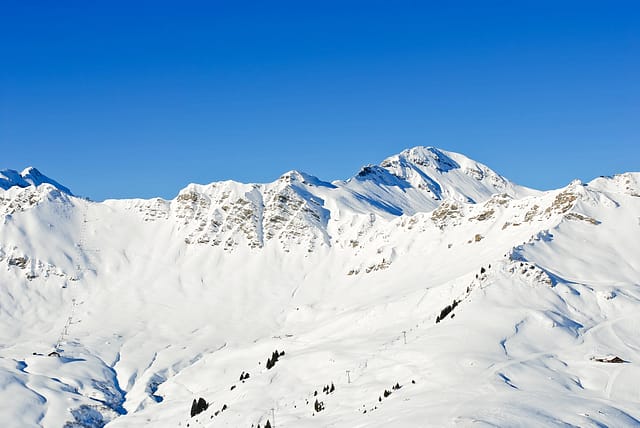
Known as “The Swiss Wall,” Le Pas de Chavanette is the last trail on our list. It sits on the France-Switzerland border and is famous for its massive moguls, with a max gradient of 76%. It’s rarely groomed and often covered in towering bumps that seem to grow all day. The Swiss Wall isn’t especially long, but it’s exhausting and wildly photogenic. From the bottom, it looks almost vertical. From the top, it looks even worse.
Wrapping up
Whether it’s a World Cup course in the Alps or a no-fall mogul field in North America, these trails represent the ragged edge of winter sports. Some are groomed, icy, and built for speed. Others are raw, bumped out, and unforgiving. But one thing they all share is how steep, demanding, and downright crazy they are. Better you than us!
Hit some or all of these? Or did we miss something obvious? Let us know at crew@montecwear.com!
Related reading