Skiing for beginners -How to get started
Learning to ski can seem daunting. After all, the mountains are huge, steep, and snow doesn’t seem all that soft at first glance, right? Your initial few days will involve plenty of snowploughing and some very soggy ski pants. But, hey, that’s what skiing for beginners is all about!

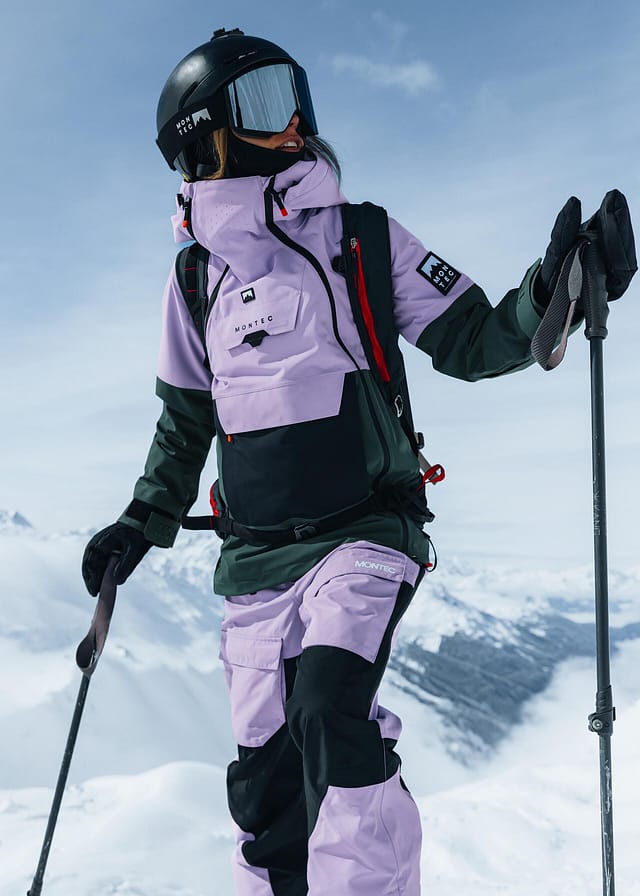
Want to know the truth? Skiing is awesome. Okay, we could list the little things we sometimes don’t like about skiing – boots can get uncomfortable, bindings can be awkward, and your goggles can fog up. And ski lifts are, well, scary at first. But trust us: you won’t regret life on two planks.
Sure, you won’t drop into double black diamonds on your first run, and the learning curve can be steep. But that doesn’t mean you shouldn’t take the challenge and experience the unbridled, unmatched, and unrelenting joy that skiing brings to so many people. So clip in, buster: it’s going to be a wild ride!
How to start skiing
Basic techniques

Skiing isn’t about speed early on. Rather, it’s about control, balance, and confidence. So, as a beginner, focus on a few key fundamentals first, such as staying centered with your weight slightly forward, managing speed, and learning how to turn.
Most of the basics start with the snowplough. This is a simple but effective technique that helps you manage both direction and speed. Let’s take a look at this and a few more tips in more detail…
Your stance and body position
Your stance and body position are the foundations of good skiing. Stay balanced with your weight forward and over your feet, knees slightly bent, and shins gently pressing into the front of your boots.
Keep your chest facing downhill and your hands in front of you. Avoid leaning back (the dreaded “backseat”), as this reduces control and makes turning harder. A strong stance helps you stay stable and react more quickly as you begin to build speed and confidence.
Stopping
Stopping is a truly essential skill to learn, and it begins with the snowplough. To snowplough, point your ski tips together and push your heels outward to form a wedge shape, with the weight on the inside edge. This creates friction against the snow, slowing you down.
The wider the wedge, the stronger the braking effect. Keep your weight centered and your knees slightly bent to stay in control. As you gain confidence, work towards parallel stopping, where both skis remain aligned, and you use your edges to come to a smooth halt.
Turning
Turning also starts from the snowplough position. From your wedge, gently shift your weight onto one ski while keeping your upper body facing downhill. This causes your skis to naturally steer in the opposite direction, allowing you to make controlled, gradual turns.
Linking these turns helps you manage speed and direction as you move down the slope. As your technique improves, you’ll begin to bring your skis parallel through each turn, eventually progressing to fully parallel turns!
Choosing the right equipment

Choosing the right equipment makes learning to ski far easier! As a beginner, you should concentrate on comfort, steering, and forgiveness rather than performance.
Rental gear is usually the best option early on, as it’s cost-effective and designed for beginners. The right setup will help you progress faster, reduce fatigue, and gain confidence.
Ski boots that fit
Well-fitting boots are especially important, as they directly affect your balance and control on skis. Your ski boots should feel snug all around your foot, with no major pressure points, but not painfully tight. Your toes should lightly touch the front when standing upright, pulling back slightly when you bend your knees into a skiing stance.
Loose boots reduce control and make skiing more difficult. However, overly tight boots can cause discomfort and cut your day short. So, take the time to get the right fit, and don’t hesitate to try a different size. Half-sizes can make a huge difference!
Ski length and type
For beginners, shorter skis are more manageable and forgiving when learning to turn. A good rule of thumb is to choose skis that reach somewhere between your chin and nose. This is usually how the rental shop guys will eyeball it!
Look for beginner or all-mountain skis with a softer flex, as these respond more easily to your movements and require less effort to control. Avoid advanced or stiff skis early on, as they’re less forgiving and can make learning feel harder than it needs to be.
Ski layers and ourterwear
When you’re getting out there for the first time, having the right clothing is pretty key for staying comfortable. Use a moisture-wicking base layer made of polyester or merino wool. Then, an insulated jacket with underarm vents to help you cool off when warm. For a full rundown on what to wear, check out our what to wear skiing and snowboarding guide.
Poles and helmet
Ski poles should be sized so your arm forms roughly a right angle when holding them. Although beginners won’t rely on ski poles heavily at first, it’s good to learn with them early on so you’re comfortable holding them later.
A helmet is an absolute must for skiing. Snow is harder than you think, and you’ll become pretty familiar with it as you learn! Protecting your head and brain should be priority number one with a well-fitting helmet. Don’t wear a beanie under it, though, as this affects fit and safety.
Ski trails and lifts

Resorts are designed with clear systems for both runs and lifts, making it easier to find trails that suit your level. As a beginner, sticking to the right slopes and knowing how to use lifts safely are key to having the best time.
Understanding how a ski area is laid out will help you navigate the mountain. Take a few minutes to study the trail map before heading out, and don’t be afraid to stick to greens for a while!
Trail colors and what they mean
Ski trails are color-coded to indicate difficulty. Greens have gentle gradients, making them ideal for beginners. Blue runs are slightly more challenging and are a natural next step once you're confident linking turns. Red runs are for intermediates. Black runs are more demanding, with steeper pitches and variable conditions, and are best avoided early on.
Some resorts also have dedicated nursery slopes, which are gentle, often flat beginner zones that sit outside the color-coded trail system entirely and are worth starting on before you hit the green runs. Always choose runs that match your ability, as staying in control is far more important than progressing to harder terrain too soon.
Lift types
Typically, beginners start with magic carpets or button lifts, which are slow and straightforward to use. Magic carpets are like flat escalators. Button lifts, or drag lifts, have a “button” at the end of a bar that you slot between your legs before it drags you up the hill.
Chairlifts are the next step. For these, you sit as the lift approaches and stand up and ski away at the top. It can feel awkward at first, but lift operators are there to help if needed. Gondolas are enclosed cabins and the simplest option. They’re often used to access higher parts of the mountain or to cover long distances, and are walk-on, walk-off.
FAQs
Skiing can feel confusing at first, and most beginners have the same handful of questions before their first trip. From costs and lessons to trail etiquette, understanding the basics early on can help you feel better prepared and more confident.
How long does it take to learn to ski?
Most beginners can get down a green run by the end of day one. By the end of a week, most people can link turns and tackle blue runs with confidence. Full mastery, carving, steeper terrain, variable snow, takes much longer, but you'll be having real fun long before you get there.
Should I take a ski lesson?
Yes. Lessons are highly recommended for beginners. A qualified instructor will teach you proper technique from the start, helping you build confidence and avoid forming bad habits. Lessons also improve safety and can speed up your progress significantly.
Do beginners need ski poles?
Probably not, but you should still use them. Most beginners focus on balance, stopping, and turning first, where poles aren’t essential. While leaving poles out early on can help you concentrate on proper body position, getting used to them is more beneficial in the long run. And you’ll certainly need them later!
Who has right of way on the slopes?
The skier in front always has priority. It’s your responsibility to control your speed and avoid anyone below you. When joining a slope or setting off after stopping, always check uphill first. Following these simple rules helps keep everyone safe on the mountain.
Is it too late to learn to ski as an adult?
Not at all! Plenty of people start skiing as adults and progress quickly with the right approach. Adults often learn more quickly than children because it’s easier for them to grasp concepts, such as weight transfer. With a lesson or two and some patience, anyone can learn, regardless of their age.
Wrapping up
Take your time, enjoy the process, and before long, you’ll be slashing turns and dropping pillows in the slackcountry! Yes, skiing might feel daunting at first. But with a little work and patience, there’s no better place on earth than the mountains. Don’t forget that everyone learns at a different pace, so don’t rush it. Focus on the basics, use suitable equipment, and stick to beginner-friendly terrain while you build confidence.
Love this article or need some more help? Hit us up at crew@montecwear.com. We’re always here for you!
Related reading